Cat Body Language Cheat Sheet: Signals, Tails & Meows

Cat Body Language & Behavior Cheat Sheet: Read Feline Signals, Postures, and Meows
Cats communicate constantly—just not always in ways humans expect. Ears, tail position, blinking, posture, and vocal patterns can reveal whether a cat feels safe, playful, overstimulated, or unwell. The goal isn’t to “decode” one signal in isolation, but to notice patterns and respond in ways that help your cat feel in control.
Start with the full picture, not a single sign
The most reliable way to read your cat is to stack clues. A tail flick might mean excitement during play, or irritation during petting—context and the rest of the body tell you which.
- Combine at least three clues at once: ears + tail + body posture (and context).
- Context changes meaning: a puffed tail during play can resemble fear, but play usually includes bouncy movement and frequent re-engagement.
- Watch transitions: a relaxed cat that suddenly freezes, stops blinking, and tightens the body is often moving from comfort to caution.
- Give choice and space first; approach later when signals return to neutral.
When in doubt, assume your cat is asking for distance. Cats who feel they have an “out” tend to calm down faster.
Ears, eyes, and whiskers: the “face dashboard”
Your cat’s face is like a live status screen—small changes can be meaningful, especially when they happen quickly.
- Ears forward and slightly angled: curious, engaged, often comfortable.
- Ears sideways (“airplane ears”): unsure or irritated; reduce noise and contact.
- Ears flattened back: defensive, fearful, or in pain; avoid handling and assess triggers.
- Soft eyes and slow blinks: calm; slow-blink back as a friendly signal.
- Wide pupils with a tense face: arousal (fear, excitement, or overstimulation).
- Whiskers forward: focused interest (toy, food, prey-like attention).
- Whiskers pinned back and muzzle tight: stress; stop petting and allow retreat.
If you’re seeing tense facial muscles paired with unusual hiding or reduced movement, consider stress or discomfort. Helpful background reading is available from International Cat Care and the American Veterinary Medical Association (AVMA).
Tail and body posture: comfort, play, fear, and aggression
The tail is one of the clearest “distance” indicators. Pair it with posture and movement speed to avoid mixed messages.
- Tail upright with a gentle curve at the tip: friendly approach, social confidence.
- Tail tucked or wrapped tightly: insecurity; avoid cornering and offer a hiding spot.
- Tail lashing/thumping: agitation or conflict; end interaction before escalation.
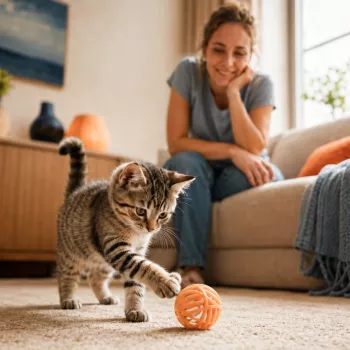
- Loose, wiggly body with short bursts: play invitation; redirect to toys, not hands.
- Crouched low with weight shifted back: fear; create distance and reduce stimulation.
- Arched back with piloerection: defensive display; do not reach in—let the cat move away.
- Rolling onto side or back: can be comfort or a defensive strategy; look for loose muscles vs. tense limbs and pinned ears before attempting touch.
| Signal | Typical meaning | Best response |
|---|---|---|
| Slow blink + relaxed ears | Comfort, trust | Slow-blink back; speak softly; let the cat choose contact |
| Ears sideways + tail flicking | Irritation, rising arousal | Pause petting; offer space; reduce handling |
| Frozen body + wide pupils | Fear or high alert | Increase distance; remove trigger; provide escape route |
| Tail upright + gentle head rub | Friendly greeting, social bonding | Allow rubs; offer a hand to sniff first |
| Puffed tail + arched back | Defensive fear response | Do not approach; block access to stressor; give time to decompress |
| Crouch + ears flattened + growl/hiss | Defensive aggression | End interaction; avoid eye contact; safely separate if needed |
Meows, purrs, chirps, and growls: what the sounds can indicate
Cat vocalizations are often “human-directed,” especially meowing. Sounds matter most when they’re new, intense, or paired with tense posture.
- Meowing: attention, food, greeting, or a request for access (door, window, lap).
- Short meows: check-in or greeting; respond calmly and observe body language.
- Repeated loud meows: urgency, frustration, or discomfort; confirm basics (food, water, litter, access) and look for stressors.
- Purring: can mean contentment, but also self-soothing during stress or pain—confirm with posture and facial tension.
- Chirps/trills: friendly excitement, often used to invite following or signal interest.
- Hissing/growling/spitting: distance-increasing signals; back off and give the cat an exit.
Everyday interactions: petting, picking up, and “love bites”
Many behavior “problems” are actually communication that went unheard. A few small habits can prevent scratches, reduce stress, and build trust.
If you want a quick visual reference you can keep by your feeding station or cat room, see the Printable Cat Body Language & Behavior Cheat Sheet.
When body language suggests stress or pain
For general care guidance, the ASPCA cat care resources are a helpful starting point, but abrupt changes should still be discussed with a veterinarian.
A printable reference for daily use
Helpful additions for the humans in the home can include calming practices that reduce loud voices and rushed movement during tense moments, such as Break the Tension: Stress Relief Techniques or Calm Your Mind: Guided Meditation Series.
FAQ
How to tell if a cat is sad body language?
Look for a change from your cat’s usual baseline: more hiding, reduced engagement, low posture, tail tucked, ears angled to the side/back, and less relaxed blinking. Because “sad” and “pain/stress” can look alike, sudden or persistent changes—especially with appetite, vomiting, or litter box shifts—warrant a vet check.
What is hello in cat language?
A friendly “hello” often looks like an upright tail, a relaxed approach, gentle head or cheek rubs, and soft eyes (sometimes with a slow blink). Respond by staying calm, slow-blinking back, and offering a hand to sniff rather than reaching over your cat’s head.














Leave a comment