Vacuum Anxiety in Pets: Calm Steps for Dogs & Cats
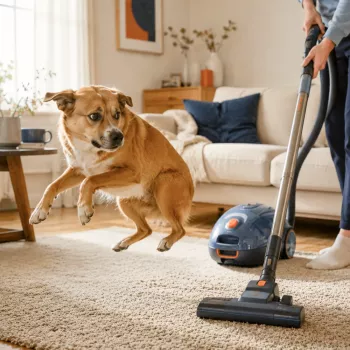
Helping Pets Handle Vacuum Stress: A Calm Routine for Dogs and Cats
Many pets react to vacuum cleaners with fear, barking, hiding, or frantic pacing. The good news is that vacuum stress can often be reduced with predictable routines, gradual exposure, and a few practical adjustments to sound, distance, and rewards. The goal isn’t to “power through” cleaning day—it’s to teach your dog or cat that the vacuum is safe, manageable, and (eventually) boring.
Why vacuums feel scary to pets
To people, a vacuum is an annoying chore. To many pets, it’s a loud, fast-moving, unpredictable object that seems to invade their space. A few common reasons explain the big reactions:
- Noise and vibration: The sharp, consistent sound plus floor vibration can be startling, especially for sound-sensitive pets.
- Unpredictable movement: Back-and-forth patterns can look like something “chasing” them or moving without clear rules.
- Learned fear: If a pet was surprised, cornered, or scolded during vacuuming before, they can associate the vacuum with threat.
- Different coping styles: Some pets avoid (hide), while others try to control the situation (bark, lunge, swat, chase).
Spotting stress early: what to watch for
Early signs are easy to miss, but catching them helps you adjust before fear escalates.
- Mild signs: lip licking, yawning, turning away, tucked tail, ears pinned back.
- Moderate signs: trembling, pacing, panting (when not hot), hiding, refusing treats.
- Escalation signs: growling, snapping, frantic escape attempts, urination/defecation.
- Rule of thumb: if panic or aggression appears, reduce intensity immediately and create more distance.
Common vacuum reactions and what they often mean
| Behavior | What it can signal | Immediate adjustment |
|---|---|---|
| Hiding under furniture | Avoidance and overwhelm | Pause, block access to tight spaces if unsafe, offer a quiet room option |
| Barking at the vacuum | Defensive response or arousal | Increase distance, use a leash barrier for dogs, reward quiet moments |
| Chasing or nipping at the vacuum | Predatory play or stress-driven overarousal | Stop movement, switch to training sessions with vacuum off, use a toy alternative |
| Shaking/trembling | High fear | End the session, provide a safe zone, restart later with much lower intensity |
Set up a calmer cleaning environment
Before training, set the stage so your pet has choices and you have control over intensity.
- Create a predictable safe zone: a back room, crate, or covered bed with familiar bedding and water.
- Soften sudden sound peaks: use white noise or calming music in the safe zone.
- Use short cleaning bursts: two to five minutes, then a break, often works better than one long session.
- Keep pathways clear: pets cope better when they can move away without feeling trapped.
- Time it strategically: vacuum after a walk, play session, or meal, when your pet is naturally calmer.
If your dog tends to guard you or “protect” you from the vacuum, consider using a baby gate or closed door so the vacuum can work without a direct face-to-face confrontation.
Desensitization steps (vacuum off → vacuum on)
Desensitization means introducing the vacuum in tiny, non-scary pieces so your pet’s nervous system stays under threshold. Think “days and repetitions,” not “one afternoon fix.”
Stage 1: Vacuum off (just existing in the room)
Place the vacuum in the room and reward calm behavior from a comfortable distance. Remove the vacuum and repeat until your pet looks neutral—no hiding, no stalking, no stiff posture.
Stage 2: Touch and move silently
Roll the vacuum a few inches without turning it on. Reward, then stop. End the session before your pet ramps up; finishing early is a success.
Stage 3: Sound at a distance
Turn the vacuum on briefly in another room (or far end of the home). Pair the sound with high-value treats. Keep it short: one to three seconds, then off, then reward.
Stage 4: Closer and longer
Over days, gradually reduce distance and increase the “on” time. If stress returns, drop back a stage immediately. Progress only when your pet is relaxed enough to eat, blink normally, and choose to disengage.
Counterconditioning: teaching “vacuum predicts good things”
Counterconditioning changes the emotional meaning of the vacuum. Instead of “that scary thing,” it becomes “that sound that makes chicken appear.”
- Pick rewards that beat the fear: tiny pieces of meat, squeeze treats, a lick mat, or a favorite toy reserved only for vacuum practice.
- Reward timing matters: deliver the reward before and during the vacuum sound, not after your pet is already panicking.
- End on a calm note: turn the vacuum off, then give a final reward in the safe zone to reinforce recovery.
- Cat-friendly setup: use tiny high-value treats or a food puzzle placed far from the vacuum path so your cat can choose distance while still earning rewards.
What to avoid (common mistakes that increase fear)
When it’s more than stress: getting extra help
For reputable guidance and referrals, consult the American Veterinary Medical Association (AVMA) pet owner resources, and consider a specialist through the American College of Veterinary Behaviorists (ACVB). General education on fear responses is also available via the RSPCA pet welfare advice.
A guided plan you can follow
A structured routine can make it easier to stay consistent day-to-day, especially during busy weeks. If you want step-by-step prompts, training checkpoints, and a simple progression schedule, see Helping Pets Handle Vacuum Stress.
If vacuum day also spikes your own stress (which pets can pick up on), supportive resources can help you stay steady and predictable while you train. Consider Calm Your Mind: Guided Meditation Series | Audio Course | Anxiety Relief Meditation or Break the Tension: Stress Relief Techniques to build a calmer routine around household chores.
FAQ
What’s the easiest pet to handle?
Temperament matters more than species: calm, well-socialized pets with predictable routines are typically easier to manage. Any pet can become easier over time with consistent training, enrichment, and an activity level that matches the household.














Leave a comment